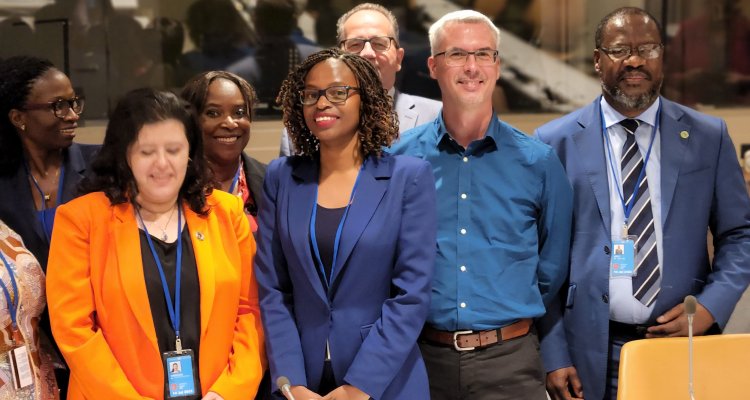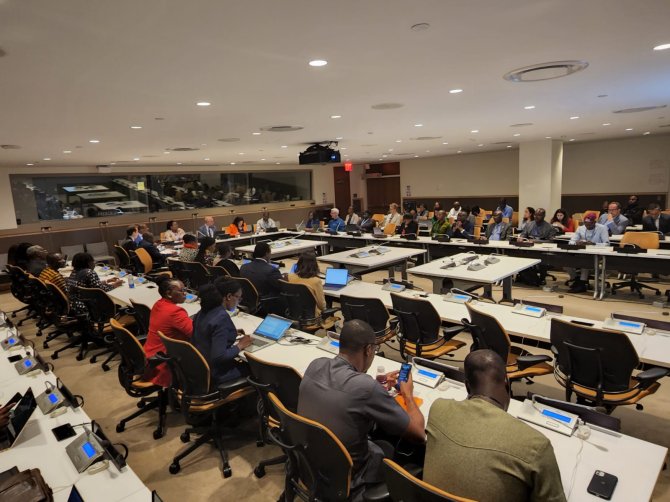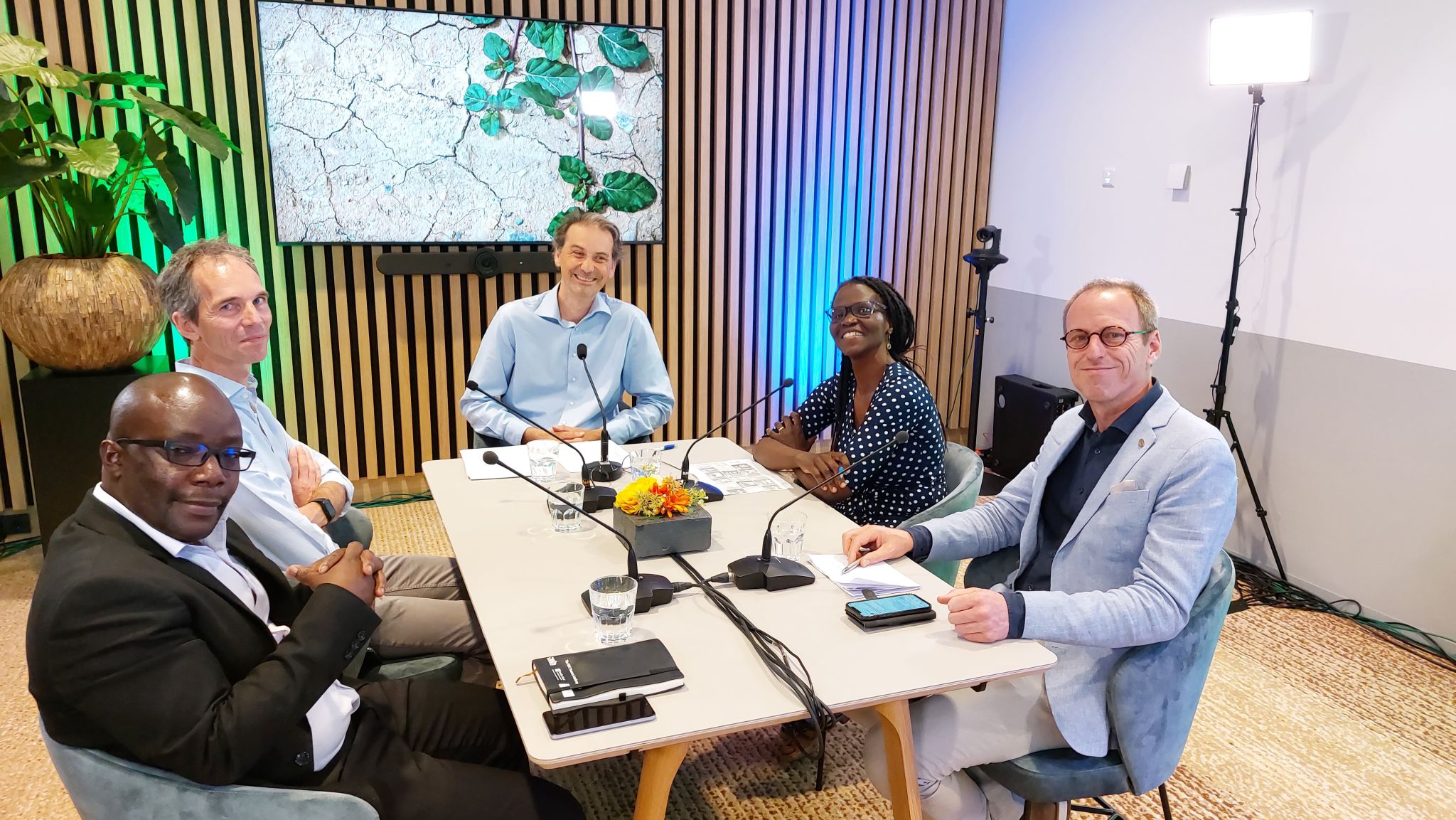
The first International Policy Dialogue on “Addressing SDG trade-offs and synergies in East-Africa” took place on 22 June 2022 at Wageningen University and Research.
Participants
- Reinier van Hoffen (Netherlands Ministry of Foreign Affairs)
- Joanes Atela (Africa Centre for Technology Studies, Nairobi, Kenya)
- Nowella Anyango (Wageningen University and Research)
- Bas van Vliet (Wageningen University and Research)
Moderator
Herman Brouwer (Wageningen Center for Development Innovation)
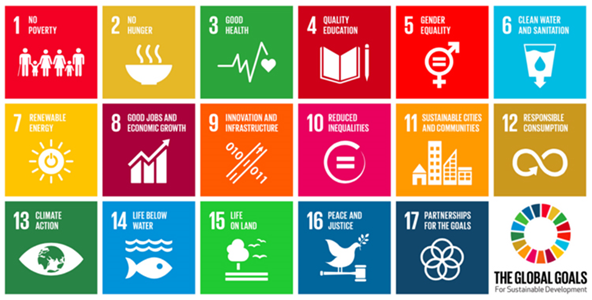
Numerous governments, businesses, and civil society organisations aim to contribute to achieving the 17 Sustainable Development Goals in the global South. However, cherry-picking SDGs coupled with lack of alignment between initiatives means trade-offs are not addressed and opportunities for synergy are missed. Progress towards achieving the SDGs is hampered by international development projects duplicating efforts on the ground; lack of coherence between donor policies; misalignment between national policies and multilateral development programmes; and diverging private sector investments. Aligning SDG efforts by these public and private actors operating across levels has itself become a challenge that will determine whether SDGs will be met in 2030. For example, investments in rapid intensification in the Kenyan dairy sector (SDG2), with the goal of reducing greenhouse gas emissions (SDG13), may lead to the unintended results of higher social stratification (SDG10) and/or gender inequality (SDG5). The numerous potential trade-offs and synergies between SDGs constitute considerable governance challenges that cut across sectors and levels. When trade-offs are not addressed, progress in one SDG comes at the expense of progress in another SDG. When synergies are ignored, valuable opportunities are lost and resources wasted. This undermines the effectiveness of the indivisible SDG agenda, which seeks to reach all the goals simultaneously. Furthermore, vulnerable and excluded groups, including women and youth, often end up on the losing side of trade-offs. They often carry an unequal burden of the negative side-effects of SDG interventions – and they tend to be forgotten when synergies are created.
The topic of the dialogue was the role of partnerships as a governance mechanism for addressing SDG interactions, i.e. in avoiding trade-offs and building synergies between SDGs. By directly engaging actors from different sectors in a collaborative process, common goals can be identified, conflicts of interest can be handled and innovative solutions can be forged. But what is the added value of cross-sector partnerships as mechanisms of alignment? Can partnerships, which are demanding in terms of time and resource investment for all involved, expand their scope beyond just a couple of SDGs? Considering the variety of needs for alignment, do cross-sector partnerships need to be at the same time cross-level partnerships? And while finding synergies between SDGs, and therefore between actors’ goals, is an attractive proposition for partnerships, can partnerships deal with trade-offs, where one actor’s goal gets in the way of another actor’s goal? Our dialogue participants shared and discussed their views on these topics.