Blog

  • Article published on SDG interactions within and between dairy policy programmes

    As part of her PhD research, Annita Kirwa published a paper with the title:

    Understanding Interactions Between Sustainable Development Goals Within and Between Policy Programmes: The Case of Kenya’s Dairy Sector

    Achieving Agenda 2030 depends on addressing interactions between the sustainable development goals (SDGs). In this paper, we conceptualize SDG interactions as synergies or trade-offs, incoming or outgoing, and internal or external, and analyze how SDG 2 (Zero Hunger) interacts with other SDGs within and across policy programmes that support the Kenyan dairy sector. The analysis of programme documents and interviews reveals that most policy programmes focus on advancing the targets of SDG 2 through internal, incoming interactions from SDG 5, 8, 10 & 13, with less emphasis on outgoing interactions from SDG 2 to these other SDGs. External interactions between SDGs in different policy programmes manifest in several ways, from unidirectional and bidirectional synergies and trade-offs to asymmetrical interactions between programmes. The patterns of synergies and trade-offs identified in this study can inform the design and implementation of nationally and internationally funded programmes that aim to support sustainable dairy development.

    Full reference: Kirwa, A. J., Karlsson-Vinkhuyzen, S., Crane, T. A., & Dewulf, A. R. P. J. (2026). Understanding interactions between sustainable development goals within and between policy programmes: The case of Kenya’s dairy sector. Sustainable Development, sd.70792. https://doi.org/10.1002/sd.70792

    The paper is available open access at https://doi.org/10.1002/sd.70792

  • Policy Dialogue at the Dutch Ministry of Foreign Affairs

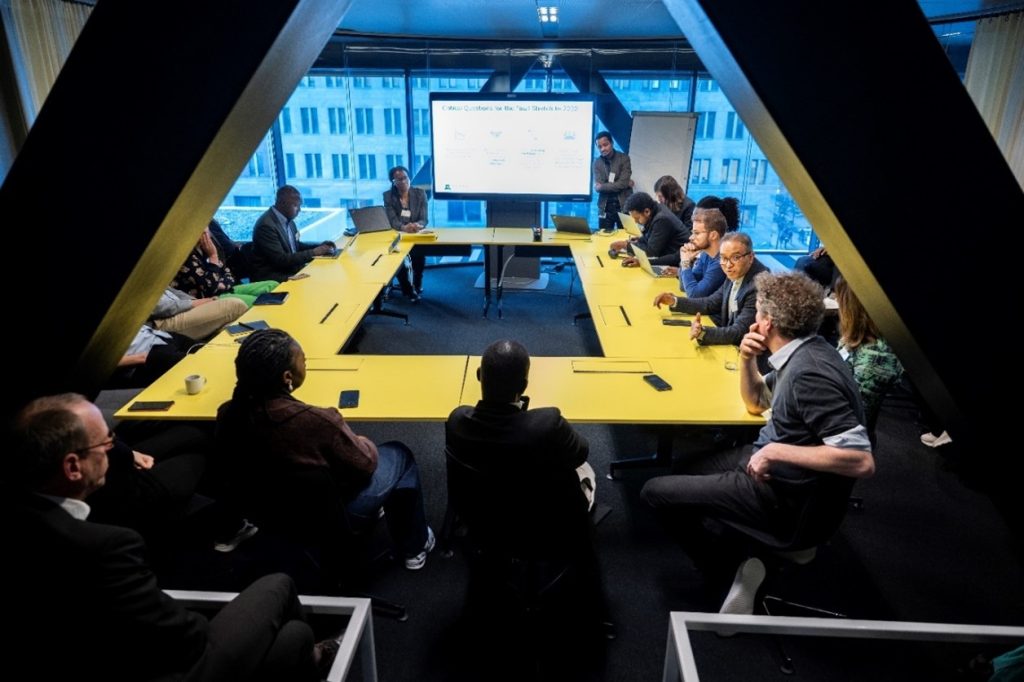
    As part of the broader “SDG Interactions and Policy Interventions” programme, our SDG Interactions in East Africa team joined a policy dialogue organised by NWO and the Ministry of Foreign Affairs programme on 4 February 2026. The dialogue was part of the Debunking Notions, Reshaping Mindsets series of conversations that Vice Versa has convened since 2024 to challenge African-European stereotypes, clichés and framings of each other. The main audience was policymakers and researchers, but industry and civil society was also represented.

    Nowella Anyango-van Zwieten, representing Prof. Art Dewulf, joined Karlijn Morsink from Utrecht University in an interview where the Principle Investigators gave a helicopter view and answered critical reflective questions about the SDG Interactions programme. Rachel Gitundu joined PhD candidates from the universities of Groningen and Utrecht to share research findings ‘from the ground.’ She gave a presentation on the topic, “Is ‘Leaving No One Behind’ Possible?​” and in the panel discussion, “Collaborations for development (?)- The question being whose development under whose costs.”

    Aytenew Tatek then gave a spirited pitch that saw our breakout session so full additional chairs had to be brought in. Starting with a brief discussion “From Multilateralism to a Multisphere World​,” Aytenew asked the audience how we would prevent our hard-won SDG gains from slipping away, shifting from self-interest mutual-interest, and missing enablers that were overlooked in governing SDG trade-offs and synergies. The take-home reflections question was, ‘Is the debunking notion the right approach in a changing world order?”

  • In Memory of Tonny Ssekamatte

    It is with great grief that we must say goodbye to Tonny Ssekamatte, our friend and colleague at the Wageningen Centre for Sustainability Governance of Wageningen University, and at the School of Public Health at Makerere University. Tonny passed away suddenly on 11 December 2025.

    Tonny was a young man and dedicated researcher, highly respected within our collaborative project on Governing SDG Interaction in East Africa. He was a great connector and, above all, an exceptionally kind, modest and warm colleague and friend to all of us.

    We are grateful for the years we were able to work with Tonny, both in his current PhD project and in earlier collaborative research with Makerere University’s School of Public Health.

    Tonny was a great communicator and connector. His warmth, openness and genuine interest in people made him indispensable to the project’s fieldwork in Kampala’s informal settlements. Tonny had the unique capacity to make deep personal connections – with his supervisors, with his colleagues at Makerere and Wageningen University, and with research subjects from all layers of society.

    Only very recently, at the end of November, we had the pleasure of participating in an extraordinary two-day workshop in Kampala, organised and led by Tonny. He brought together more than 40 stakeholders from across the Water, Energy, Food and Health sectors, enabling a unique dialogue between governmental officials, scholars and the residents of an informal settlement in Kampala.

    During that workshop Tonny was in his element – engaged, generous and shining. We are committed to ensuring that the findings of his valuable research, which he was preparing for publication, will see the light in the months to come.

    Our thoughts are with his wife, children and family, who must now bear this unimaginable loss. We also extend our deepest sympathies to his friends and colleagues at Makerere University, and to his fellow PhDs and Postdocs in Wageningen, Uganda, Kenya and Ethiopia, who jointly suffer in the loss of such a great person.

    We will honour and remember Tonny for the great work he did and the kind person that he was.

    Dr. Bas van Vliet

    Dr. Mary Greene

    Prof. Dr. Machiel Lamers

    Prof. Dr. Simon Bush

    Prof. Dr. Art Dewulf

  • Kenya National stakeholder engagement workshop in Nairobi

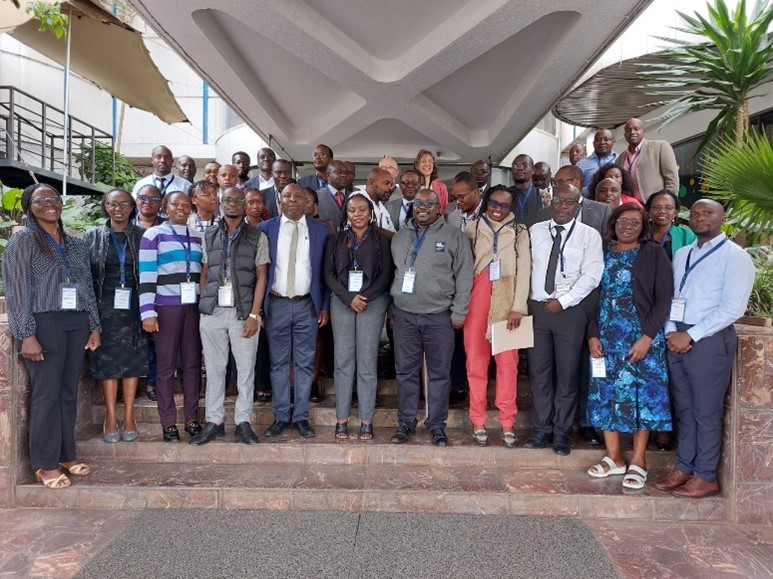
    The Kenyan team, supported by ARIN, organised the final stakeholder workshop in Kenya last December. The workshop was well attended with representatives from civil society, the private sector, academia, and government. The focus was on strengthening governance of Sustainable Development Goal (SDG) interactions through improved donor–recipient and inter-donor coordination within Kenya’s dairy sector.

    The workshop was opened by WUR’s Dr. Sylvia Karlsson-Vinkhuyzen and moderated by Nowella Anyango-van Zwieten. Two provocative keynotes were given, first by Prof. Owuor Olungah of the University of Nairobi on the need for a strategic, context-aligned vision among aid recipients to ensure that development resources are used effectively and sustainably. He underscored the value of recognizing SDG interactions and fostering multi-stakeholder collaboration particularly the importance of knowing which actors to convene, when, and for what purpose to achieve a shared development vision. The second keynote was delivered by Dr. Dominic Menjo, Advisor on Food Security at the Executive Office of the President. Drawing from a recent report aligning development program loans with the Bottom-up Economic Transformation Agenda (BETA) and County Integrated Development Plans (CIDPs), he highlighted the agenda’s focus on ensuring that development decisions yield tangible economic outcomes for Kenyan citizens. He noted the administration’s ambition to transition from a sociopolitical to a socioeconomic governance model.

    The Kenyan team also gave the following presentations:

    • Governance of SDG Finance in East Africa by Charles Tonui
    • Global-to-local SDG Governance, case of Kenya dairy sector by Annita Kirwa
    • Collaboration for sustainable development & Funding modalities in Kiambu county by Rachel Gitundu
    • Exploring alignments for SDGs action at the sub-national level in Vihiga county by Dr. Eric Magale

    Prof. Olungah thereafter moderated a panel discussion of all four presenters for deeper examination of governance challenges, stakeholder coordination patterns, and the implications of SDG interactions for the dairy sector’s development pathways.

    The afternoon session shifted to an interactive co-creation exercise with stakeholders. Participants identified thematic areas of focus across organizations, mapped linkages to specific SDGs, and examined existing and emerging collaborations within the dairy sector. The session also explored donor-recipient engagement dynamics and produced a preliminary mapping of traditional and emerging donors shaping Kenya’s development cooperation landscape. Discussions reflected on evolving global trends and envisioned how Kenya could position itself within a shifting development architecture.

    This third stakeholder workshop reinforced the importance of coordinated governance approaches to harness SDG interactions effectively. Insights from research, policy, and practitioner perspectives highlighted the need for strategic visioning, trust-building, and innovation in donor–recipient relationships. The co-creation processes demonstrated a strong stakeholder commitment to collaborative pathways for strengthening Kenya’s dairy sector and advancing sustainable development.

  • Article published on Bridging Silos Through an Integrated Development Approach

    Our project colleagues at WLRC in Ethiopia published a paper, led by Aytenew, with the title:

    Bridging Silos: Unlocking SDG Synergies Through an Integrated Development Approach to Landscape Restoration

    Achieving Sustainable Development Goals (SDGs) requires integrated interventions that leverage synergies and minimize trade-offs across sectors and institutions. However, siloed institutional structures often prevent such alignment. Using panel data from 361 households and a difference-in-differences approach, this study examines how an integrated landscape restoration intervention, combining homestead gardening, soil and water conservation (SWC), and credit provision, affects SDG outcomes in rural Ethiopia. The study evaluated impacts on SDG-1 (no poverty), SDG-2 (zero-hunger), SDG-13 (climate-action), and SDG-15 (life-on-land) outcomes. Results indicate no statistically significant outcomes from single-intervention participation. Among dual interventions, SWC + credit improved all SDG indicators except SDG-1, while homestead gardening + SWC showed limited impacts. These results suggest that credit provision plays a critical catalyst in widening the impact of biophysical interventions across multiple SDGs. Participation in the full tripartite intervention induced significant, synergistic improvements across all SDG outcomes. These findings provide empirical evidence that bundling biophysical restoration with socio-economic interventions maximizes synergies. The results also underscore the need to inform integrated development approaches using ex-ante analysis of potential synergies and trade-offs among interventions to optimize efficacy and avoid unintended consequences. The findings offer critical guidance for evidence-based multi-objective policy formulation to advance the 2030 Agenda.

    Full reference: Gugissa, D. A., Gelaw, F., Bantider, A., Yimam, D. A., Tatek, A. E., Gete, V., Dewulf, A., & Zeleke, G. (2025). Bridging silos: Unlocking SDG synergies through an integrated development approach to landscape restoration. Sustainability, 17(22), 10190. https://doi.org/10.3390/su172210190

    The paper is available open access at https://doi.org/10.3390/su172210190


  • Academic Engagement at the 2025 Busan Global Partnership Forum

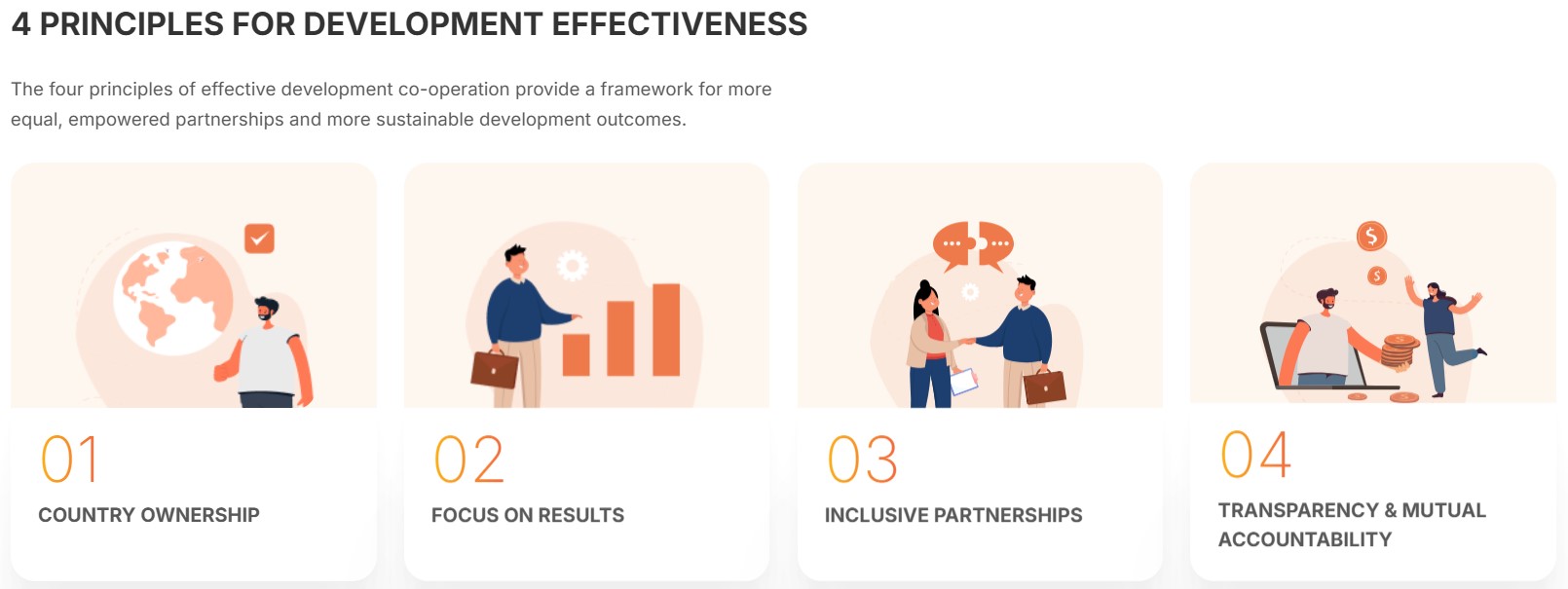
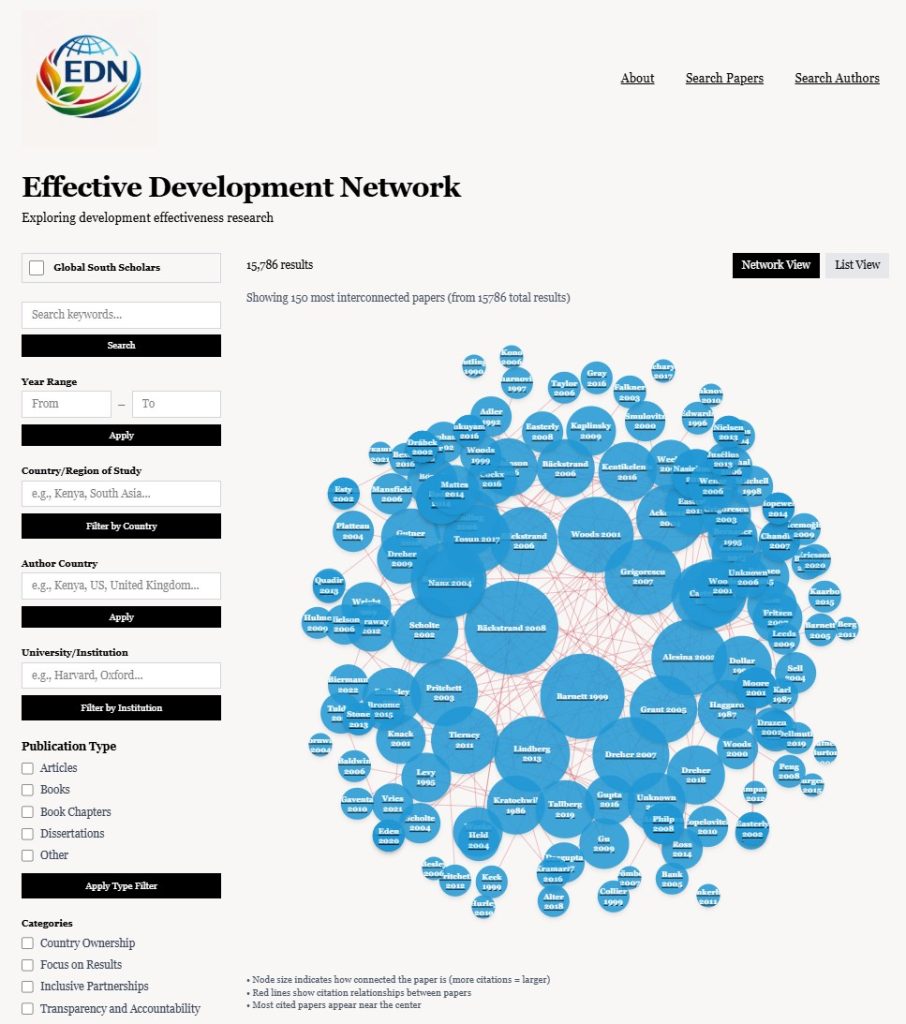
    Nowella Anyango-van Zwieten took the floor (see the recording here) at the 2025 Busan Global Partnership Forum (30 Sept. – 1 Oct 2025) in Seoul, South Korea to advocate for deeper academic engagement with the Development Effectiveness Agenda. She is part of an academic effort mapping out experts and institutions working on development effectiveness – across disciplines, sectors and regions, including those from the Global South. Academic engagement is an ambition in the working programme of the Global Partnership for Effective Development Co-operation (GPEDC).

    Nowella gave further elaboration at the 30th Steering Committee Meeting of the Global Partnership, which she attended as an observer on 1 October 2025.

    The growing international team of scholars that she is working with have a four-part action strategy:

    • to build a comprehensive global mapping of academic scholars and institutions working on development effectiveness;
    • that will be demand driven and responsive to stakeholder needs;
    • and will include an Development Effectiveness Expert Survey to track expert views, respond to emerging challenges, and gather rapid, rigorous input on proposed policies and interventions;
    • and provide an opportunity for policymakers, businesses, civil society organisations or communities to commission systematic academic reviews and evidence gap maps to synthesise the state of knowledge on priority topics.

  • “Aligning Minds” stakeholder workshop at Addis Ababa

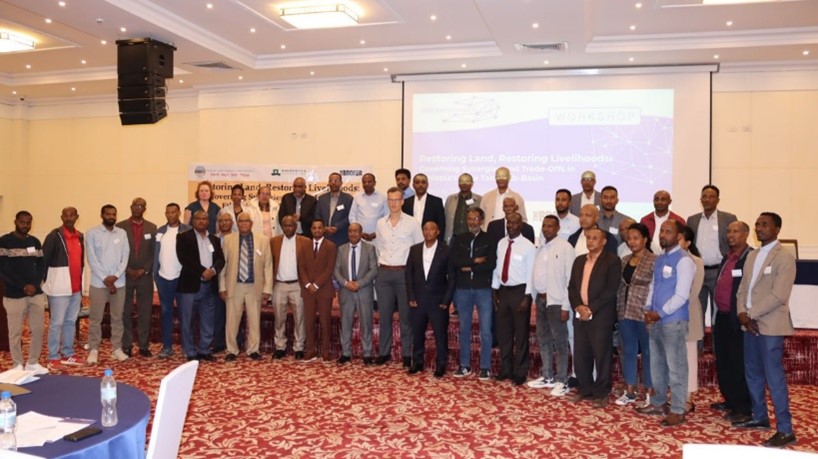
    This pivotal event deepened the national dialogue on governing SDG interactions by building directly on the initial 2024 workshop. The forum was attended by important national and international stakeholders working on land and forest restoration processes including a diverse group of government officials, development partners, researchers, and local experts. They critically interacted with the research findings presented by Aytenew Tatek, Dereje Yimam and Dr Desalegn Amlaku. The meeting was opened by Dr Gete Zeleke, Director General of the Water and Land Resource Centre (WLRC). Keynote speeches were given by Jelmer van Veen, First Secretary at the Netherlands Embassy in Addis Ababa, Dr. Alemayehu Wassie, Executive Director of ORDA Ethiopia and Dr. Zerfu Hailu, Senior Land Administration/Policy Expert from the Ministry of Agriculture. During the workshop – guided by the Broker – we also tested an Aligning Minds Stakeholder Guide, guidelines for “meaningful stakeholder engagement” specific for enhancing “research impact on policy interventions.”

    A highly impactful component was the facilitated scenario-planning exercise, which moved the discussion from analysis to forward-looking strategy. Participants identified governance arrangements, land tenure security, funding, and peace & security as the four most critical and uncertain forces shaping the future of restoration. By developing plausible future scenarios based on these axes, stakeholders proactively explored challenges and opportunities, leading to more resilient strategic thinking.

    The workshop took place on 13 May 2025 and successfully validated the project’s emerging research insights and translated them into a shared, actionable understanding among key actors. It concluded with a reinforced consensus on the necessity of multi-stakeholder collaboration and adaptive governance to unlock SDG synergies in Ethiopia’s complex restoration landscape.

  • Policy Dialogue at the 11th Session of the Africa Regional Forum on Sustainable Development (ARFSD) in Kampala

    On 9 April 2025, our team was part of a policy dialogue at the Eleventh Session of the Africa Regional Forum on Sustainable Development (ARFSD) in Kampala. Tonny Ssekamatte and Rachel Gitundu gave presentations at the side event, Governing SDG Interactions for Driving Women’s Empowerment, Food Security and Decent WorkARFSD is an intergovernmental event convened annually by the Economic Commission for Africa (ECA) in collaboration with the African Union Commission (AUC), the African Development Bank (AfDB) and the United Nations system. The side event was co-organised by The Broker, SOAS London, University of Amsterdam, University of Groningen and Wageningen University – with special appreciation to Malin Olofsson.

  • Engaging with policy makers at the Dutch Ministry of Foreign Affairs

    On 11 February, researchers from the “Governing SDG interactions in East-Africa” were at the Hague for meetings with experts at the Ministry of Foreign Affairs. The meetings were scheduled and organised by Liesbeth Voets from the Directorate General International Cooperation. She also moderated the sessions together with Dr. Nowella Anyango-van Zwieten.

    Starting with a lunch session, the SDG Interactions project was introduced by Dr. Sylvia Karlsson-Vinkhuyzen. This followed a brief overview presentation by Dr. Nicky Pouw of the broader Knowledge Brokering and Synthesis Project that our project is part of.

    The highlight of the lunch session was the presentation of preliminary findings by the PhD candidates:

    • Charles Tonui: SDG Financing Architecture between and within international donors, and the Government of Kenya
    • Dereje Yimam: Key Governance Factors in a Fragile system: the case of Kunzila Water, Sanitation and Health Programme, Ethiopia
    • Tonny Ssekamatte: Participation of Informal Households in the Governance of Water, Energy, Food and Health in Kampala
    • Annita Kirwa: Internal and External SDG Interactions betweenPolicy Programmes in the Kenyan Dairy Sector
    • Rachel Gitundu: Local Realities of SDG Interactions in Multilevel Development Initiatives through an Intersectionality Lens

    The Ministry experts mentioned that our findings shed important light to some of their own work, saying the insights were ‘awesome’, ‘very touching’ and ‘inspiring.’ There was also commendation of the clear and strongly communicative figures used in the presentations to depict SDG interactions.

    In one-to-one talks with specific experts, we also discussed policy coherence, food security, national SDG coordination and the Dutch Africa strategy of the Netherlands.